Start with the actual mobile kitchen
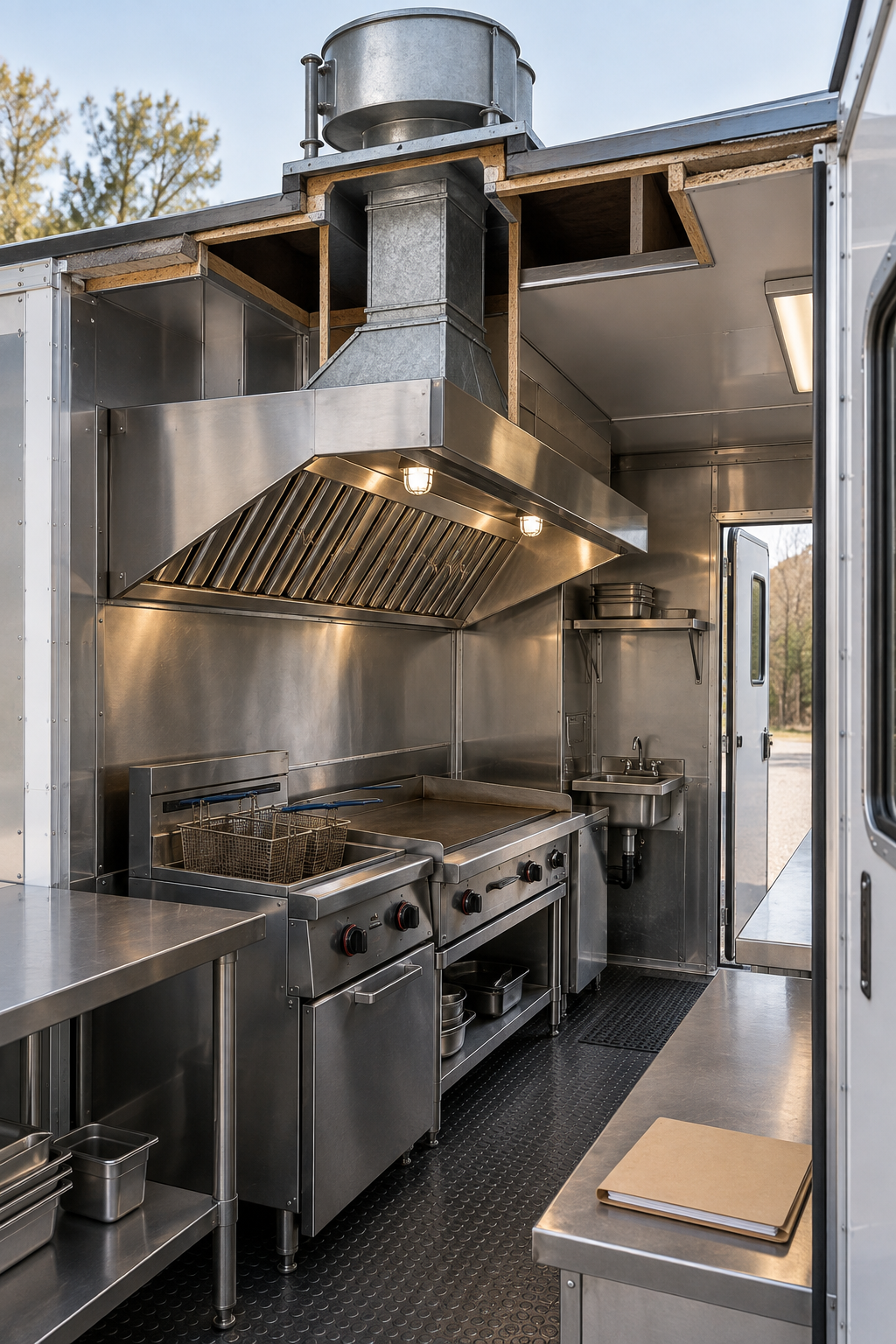
A food truck or trailer is not just a small fixed restaurant. The cooking equipment, hood, filters, duct, roof fan, fuel and power setup, parking location, and access clearances move together. Before calling about hood cleaning, identify that actual unit and the complete installed grease-exhaust path.
Also name two places: where the unit currently operates and where the cleaning could take place. Those may involve different property contacts, access rules, fire-code questions, and practical work conditions. Do not assume an event space, commissary, storage yard, driveway, or public parking area is automatically a suitable service site.
Texas mobile-food-vendor licensing, local fire-code questions, hood and exhaust cleaning, fire-suppression service, and equipment repairs are separate decisions. A record from one lane does not prove the others are complete.
Trace the compact exhaust path
Start inside the unit at the cooking equipment that produces smoke or grease-laden vapors. Follow the installed path through the canopy, grease filters, plenum or transition, duct, roof fan, discharge area, and any grease-containment component. Record what is visible without opening protected equipment, climbing onto the roof, or removing access panels yourself.
Forney’s published food-service code describes hoods, grease-removal devices, fans, ducts to the roof, and related equipment as one exhaust-system path for covered food establishments. Confirm with the responsible city or fire-code contact whether and how that section applies to the particular mobile unit.
Build a mobile-unit fact card
Keep the facts in one note instead of sending an unlabeled group of close-up photos.
| Record this detail | Useful photo or document | Why it changes the call | Do not assume |
|---|---|---|---|
| Unit identity | Truck or trailer description, unit number, and exterior overview without private registration details. | Keeps estimates, records, and follow-up tied to the correct mobile kitchen. | One fleet record applies to every unit. |
| Cooking profile | List of fryers, griddles, charbroilers, ranges, ovens, or other equipment under the hood. | Explains what produces grease and how the cooking arrangement relates to the installed hood. | Every food-truck menu creates the same exhaust load. |
| Hood and filters | Full hood view, approximate length, filter count, and readable equipment identification when safely visible. | Defines the starting point and prevents a detail photo from hiding the system size. | Cleaning the visible canopy alone covers the complete exhaust path. |
| Duct and fan access | Safe ground-level views of the roofline, fan location, exterior access, and any known panel or clearance limit. | Shows whether the service conversation needs a special access plan for the compact roof and duct path. | The fan or duct can be reached safely from the unit interior. |
| Suppression and other systems | Existing service records and a general view that does not disturb nozzles, links, controls, fuel, or electrical equipment. | Keeps separate inspection, shutdown, and service contacts visible. | Hood cleaning includes suppression, electrical, fuel, or mechanical work. |
| History and open items | Last cleaning report, invoice, photos, label, and any documented inaccessible or repair item. | Gives the caller a supported date and exposes unresolved access or scope questions. | A sticker or invoice proves every system area was cleaned. |
If the unit has no reliable prior record, say the last proven cleaning date is unknown. Use the visible-signal guide to describe what you can observe without turning a surface check into a diagnosis.
Choose a workable service site
The proposed work location belongs in the scope conversation. Ask these questions before agreeing to a time:
- Who controls the parking or service area, and has that person approved the unit, work window, and occupied space?
- Is there enough exterior clearance to reach the roof fan and work around the unit without blocking traffic, customers, neighboring tenants, or an exit?
- Which person controls keys, gates, alarms, shore power, generator shutdown, fuel shutdown, and return-to-service decisions? Do not operate those systems without the responsible party’s plan.
- What water, wastewater, grease, runoff, floor-protection, and cleanup method is proposed, and who confirms it is allowed at that property?
- Can the unit remain level, secured, unoccupied, cooled down, and unavailable for food preparation for the full agreed window?
- Where will filters, removable parts, tools, hoses, and containment materials be staged without contaminating food or blocking access?
- Who inspects the unit after the cleaning, receives the records, and authorizes it to move or return to operation?
These are preparation questions, not permission to choose a location or perform the work. The property contact, provider, equipment owner, and responsible authorities must settle the actual plan.
Separate the service lanes
| Question | Correct lane | Record to keep |
|---|---|---|
| Which hood, filters, duct areas, fan, and containment are in the cleaning scope? | Commercial hood and exhaust cleaning. | Dated scope, report, photos, invoice or work order, label details, and exceptions. |
| Are nozzles, detection, cylinders, pull stations, protected appliances, or suppression tags current? | Qualified fire-suppression inspection or service, separate from grease removal. | Suppression-system record for the actual unit. |
| Does the fan, airflow, switch, interlock, motor, generator, shore power, or fuel system operate correctly? | Responsible mechanical, electrical, equipment, generator, or fuel-system party. | Diagnosis and completion record for the named system. |
| Is an access panel, hinge, clearance, duct, hood, or cookline change required? | Authority, design, permit, equipment, mechanical, or repair conversation as applicable. | Approved plan or work record plus any required follow-up inspection. |
| Which license, fire inspection, location rule, or operating approval applies? | Texas DSHS and the responsible local authority for the unit and operating location. | Current license and inspection material issued for that lane. |
Use the cleaning-versus-suppression guide when the records or inspection language mix the two systems. Cleaning can define an exhaust-cleaning scope. It cannot approve the unit, certify another system, or repair an operating problem.
Keep the record with the unit
A mobile unit can work at different properties and in different jurisdictions, so the record should identify the exact truck or trailer rather than only a business name. Retain the service date, unit identity, hood or exhaust-system reference, agreed areas, accessible and inaccessible areas, before-and-after photos, invoice or work order, label details, and any open follow-up.
Keep suppression, mechanical, electrical, fuel, repair, license, and inspection records as separate documents. Link them by unit and date when they relate, but do not relabel one as proof of another.
Forney’s published food-service code describes a dated cleaning label and certificate for covered establishments. Ask the city what documentation applies to the particular mobile unit and where it must be kept or submitted. The site’s documentation page explains how reports, photos, labels, invoices, and exceptions fit together without claiming that one item proves compliance.
Confirm the current authority path
Beginning July 1, 2026, the Texas Department of State Health Services says mobile food vendors must use the statewide DSHS license. DSHS describes Type III units as those that prepare, cook, hold, and serve food from a food vending vehicle.
State licensing does not erase local fire and location questions. Texas Health and Safety Code Chapter 437B says mobile food vendors must follow applicable state and local laws, including fire codes, location restrictions, and zoning codes. Forney says its Building Inspections Division administers building and fire codes and handles food-establishment responsibilities involving mobile vendors and special events.
For a unit operating in Forney, ask the city which fire-code, inspection, location, and record questions apply now. For work elsewhere, ask the responsible jurisdiction there. Do not rely on an old permit, another city’s inspection, or a web summary to answer the current unit-specific question.
Prepare the hood-cleaning call
Have these details ready:
- Truck or trailer identity and the city where it operates.
- Cooking equipment under the hood and the usual cooking volume or schedule.
- Hood length, filter count, duct route, fan location, and any known access limitation.
- Safe overview photos from inside and outside the unit.
- Last proven cleaning date, report, photos, invoice, label, and open items.
- Proposed service location, property contact, access window, parking clearance, and utility or containment questions.
- Separate suppression, mechanical, electrical, fuel, repair, licensing, or inspection items that should not be folded into the cleaning request.
Ask what hood-to-fan areas are included, how inaccessible areas or newly found repair concerns will be documented, what records will be delivered, and what can change the service window. The commercial hood-cleaning page owns the broader cleaning scope and phone next step; the timing page explains why access, system size, condition, protection, and cleanup affect the window.
The call can clarify a mobile exhaust-cleaning job. It cannot determine licensing, interpret fire code, approve the work site, service suppression equipment, or promise inspection results.