Start with the appliance and fuel
A wood-fired oven, charcoal grill, smoker, or other solid-fuel appliance needs a more specific hood-cleaning conversation than “one hood, one date.” Identify the exact appliance and fuel, then match them to the installed hood, duct, exhaust fan, last supported cleaning record, access plan, and person responsible for shutdown decisions.
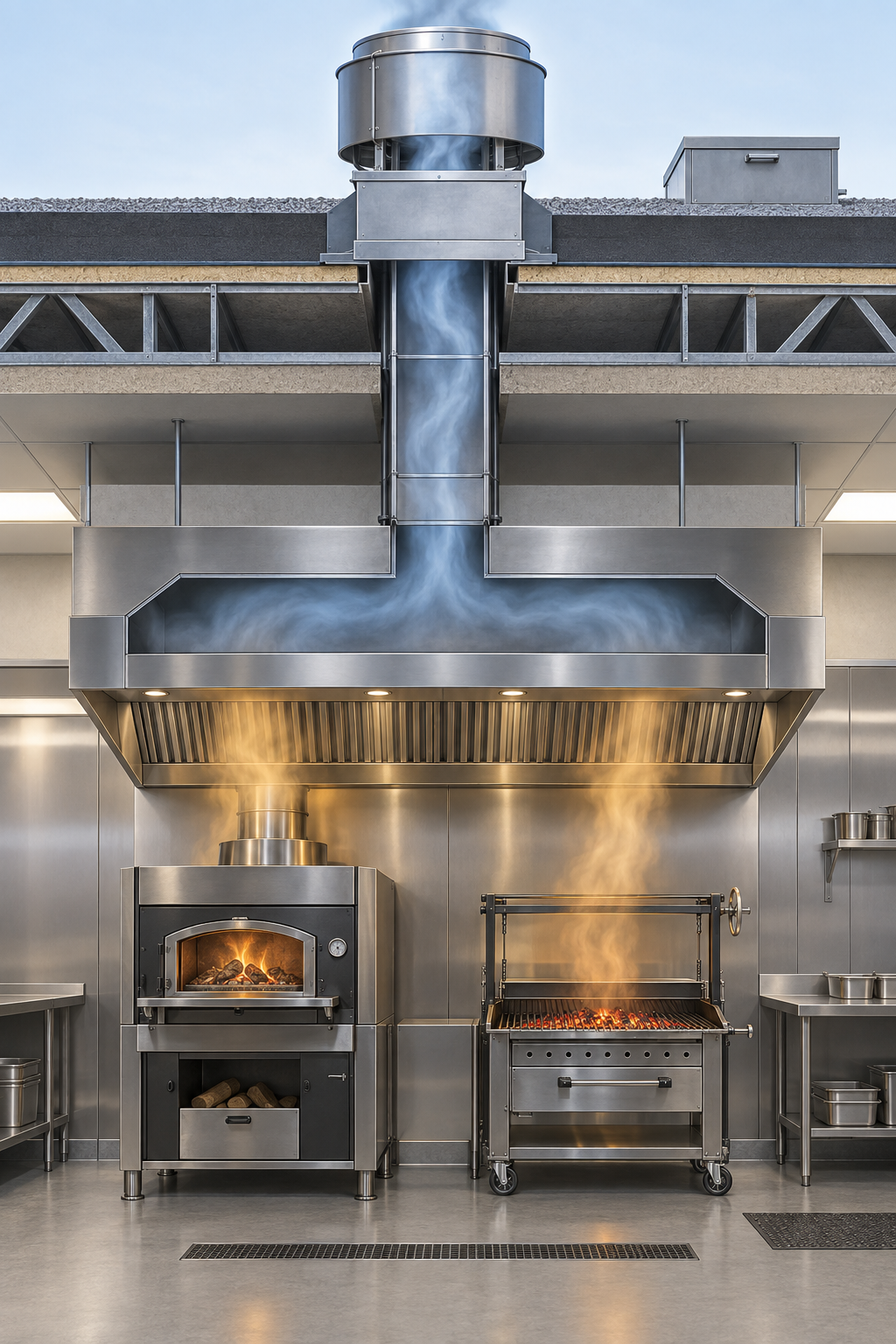
Do not assume the oven interior, appliance flue or chimney, ash removal, fuel storage, fire-suppression system, electrical controls, repairs, or code approval are included in a commercial hood-and-exhaust cleaning call. Ask each responsible party to define its own scope and leave its own record.
The commercial hood-cleaning page owns the broader canopy-to-fan cleaning scope. This guide adds the solid-fuel facts and service boundaries that make that call usable.
Trace the installed exhaust path
Begin with records and safe-to-read identifiers, not a guess from canopy shape or one menu item. A listed appliance with an integral exhaust arrangement can be different from an appliance installed under a separate commercial hood. The actual model, manufacturer instructions, approved plan when available, and current authority direction matter.
Use this sequence to organize what is already known:
- Name the exact cooking appliance and its safe-to-read manufacturer and model information.
- Record the solid fuel actually used—wood, charcoal, mesquite, briquettes, or another fuel named in the equipment records.
- Identify the hood or manager-assigned system ID associated with that appliance.
- Match the hood to its duct and exhaust fan using plans, prior cleaning reports, labeled photos, or a qualified party’s findings.
- Attach the last cleaning report, matched before-and-after photos, invoice or work order, service-label details, and any inaccessible-area note.
- Record which appliance, duct, fan, roof, gate, alarm, property, and shutdown detail still needs confirmation.
Do not remove filters, open a duct panel, climb onto the roof, disturb suppression components, handle fuel or ash, or operate controls just to finish the list. An honest “unknown” is more useful than an unsafe inspection or a guessed answer.
Build a solid-fuel call card
Keep one card for each exhaust system. If two appliances connect to different hoods or fans, do not mix their photos and service histories.
| Record this | Useful evidence | Why it changes the call | Do not assume |
|---|---|---|---|
| Appliance identity | Full floor-level view, safe-to-read label, model, manual, submittal, or approved plan. | Separates a wood-fired oven, smoker, charcoal grill, and other equipment that may have different installed arrangements. | One appliance name proves the hood, duct, listing, or approved configuration. |
| Fuel and cooking profile | Fuel actually used, typical operating days and hours, and the food/process handled by the appliance. | Gives the cleaning conversation the real cooking condition instead of a generic restaurant category. | Every wood or charcoal operation creates the same deposits or service interval. |
| Hood and system ID | Full canopy view, filter bank, manager-assigned ID, and matched records. | Keeps the request attached to the right exhaust path when a kitchen has several canopies. | The nearest visible fan or one shared photo folder belongs to this hood. |
| Duct and fan path | Prior reports, plans, labeled photos, known access panels, safe exterior overview, and qualified findings. | Defines which connected areas belong in the cleaning-scope question. | Cleaning the visible canopy alone proves the connected duct and fan were included. |
| Supported history | Dated report, invoice or work order, matched photos, service-label details, and exception notes. | Distinguishes a proven cleaning from a remembered date or an unlabeled sticker. | One document proves every connected area was inspected, accessible, or cleaned. |
| Access and shutdown owner | Responsible manager, property contact, alarm/gate/roof process, work window, and provider's proposed shutdown plan. | Shows who can confirm safe readiness and access before the appointment. | A web checklist authorizes staff to operate controls, handle fuel, or open equipment. |
| Current reason for the call | Exact inspection wording, visible condition, overdue or missing record, changed operation, or estimate request. | Keeps cleaning from being offered as the answer to a repair, design, or approval question. | Every smoke, airflow, odor, heat, or inspection concern is caused by cleaning condition. |
The Type I versus Type II guide explains the hood-identification boundary. Fuel type and canopy appearance can inform a question, but they do not replace the installed label, listing, plan, manual, or authority record.
Keep six service lanes separate
Solid-fuel kitchens put related equipment close together. That does not make every task one service.
| Condition or task | Conversation to start | Record to keep | Do not assume |
|---|---|---|---|
| Deposits in the commercial hood, filters, accessible duct, exhaust fan, or connected grease path | Commercial hood and exhaust cleaning. | System-specific scope, dated report, matched photos, invoice or work order, label details, and access exceptions. | The appliance interior, flue, chimney, ash area, or suppression system is automatically included. |
| Oven, smoker, grill, firebox, integral vent, flue, or manufacturer-maintenance question | Appliance manufacturer or the qualified appliance/flue service appropriate to that exact listed equipment. | Manual reference, maintenance scope, findings, and completion record. | A hood-cleaning report documents appliance maintenance. |
| Fuel storage, hot-fuel removal, ash container, ember, or disposal question | Restaurant's trained responsible party, appliance instructions, property plan, and authority guidance as applicable. | Approved operating or safety procedure and any required inspection record. | The exhaust cleaner or this page directs staff to handle fuel or ash. |
| Nozzle, agent, cylinder, pull station, detection, protected-appliance, or suppression-tag question | Qualified fire-suppression inspection or service. | Suppression report for the named system and appliances. | Grease removal tests or certifies the suppression system. |
| Fan not running, poor capture, unusual noise, wiring, switch, interlock, leakage, or equipment damage | Qualified mechanical, electrical, controls, appliance, or repair diagnosis. | Diagnosis and repair record for the exact component. | Cleaning corrects an operating, electrical, or design problem. |
| Changed appliance, unclear listing, shared exhaust, permit, clearance, plan, or code question | Responsible design, permit, property, and authority parties. | Current plan, approval, permit, inspection note, or written direction. | A cleaning estimate or completed cleaning approves the installation. |
Use the cleaning-versus-suppression guide when the documents combine those two jobs. Keep each record attached to the same named appliance and exhaust-system ID, but do not relabel one service as proof of another.
Confirm shutdown and access responsibilities
Official NFPA public development material describes commercial exhaust-cleaning preparation that involves shutting down and controlling equipment, extinguishing open flames, and addressing solid fuel before cleaning. Those are responsibilities for properly prepared people following the actual equipment, provider, property, and authority requirements—not instructions for a restaurant manager to improvise from a web page.
Before scheduling, ask:
- Who is responsible for cooling and shutting down the solid-fuel appliance under its manufacturer and restaurant procedures?
- Who confirms whether fuel must be removed, when that can happen safely, and where it may be handled or stored?
- Who controls the exhaust fan, related switches or breakers, suppression interface, gas or electric equipment, alarms, gates, keys, and return-to-service decision?
- Which provider or property party controls roof access, and what fall-protection or access method will that party use?
- What food, cookware, prep equipment, floors, and nearby surfaces must be removed or protected, and who confirms the plan?
- How will wastewater, removed deposits, and other cleaning waste be contained and disposed of under the provider’s and property’s plan?
- Who receives the final walkthrough, exception notes, photos, and separate repair or authority questions?
Do not promise that a particular shutdown method is correct before the parties responsible for the installed equipment and work plan confirm it.
Keep the right record after each job
The hood/exhaust cleaning record should identify the restaurant, the exact system, the service date, the agreed areas, what was accessible, what was cleaned, what was not reached, matched photos, and open follow-up items. The site’s documentation page explains how reports, photos, service-label details, invoices, and exception notes fit together.
Keep appliance or flue maintenance, ash/fuel procedures, suppression inspection, repair, and authority records as separate documents. Link them by appliance/system ID and date when they relate. Do not merge them into one vague “hood passed” folder.
If the previous cleaning date cannot be supported, record it as unknown. That gives the next conversation a truthful starting point.
Use Forney’s current authority path carefully
The City of Forney’s current Adopted Building Codes page says the city adopted the 2021 International Code series, including the Fire and Mechanical Codes, with local and North Central Texas Council of Governments amendments. Its current Fire Codes and Building Standards page identifies the 2021 International Fire Code with amendments and describes the city’s NFPA-edition context.
The public NFPA 96 (2024) publication gives solid-fuel cooking operations their own chapter. Official NFPA standards-development material also uses briquettes, mesquite, hardwood, and charcoal as examples of solid cooking fuel and connects solid-fuel equipment to inspection, cleaning, maintenance, and cleaning-preparation considerations.
Those sources explain why solid fuel deserves a specific fact-finding conversation. They do not let this guide identify the locally applied section, approve an installation, assign a legal cleaning interval, or replace manufacturer instructions and authority direction for a real kitchen.
Use the site’s NFPA 96 frequency page for interval planning. Keep the cooking profile and actual deposit condition in that discussion, then confirm the current requirement with the responsible authority and qualified parties.
Prepare the cleaning call
Have these details ready:
- Restaurant address and the exact appliance, manufacturer, model, and manager-assigned system ID.
- Solid fuel actually used and the normal cooking days, hours, volume, and process.
- Hood and filter details plus the connected duct and exhaust fan—or the exact connection that remains unknown.
- Last supported cleaning date, report, matched photos, invoice or work order, service-label details, and access exceptions.
- Current reason for the call: condition, missing record, inspection wording, changed cooking operation, or estimate request.
- Known roof, gate, alarm, landlord, tenant, work-window, and system-access limits.
- The named people responsible for appliance shutdown, fuel/ash procedures, property access, manager handoff, and return to service.
- Separate appliance/flue, suppression, repair, design, permit, or authority questions that should not be folded into the cleaning request.
Call (469) 728-8110 to discuss the commercial hood-and-exhaust cleaning scope. The call can clarify which connected areas need to be inspected or quoted for cleaning. It cannot assign the legal interval, approve the installation, or substitute for appliance, fuel/ash, suppression, repair, design, permit, or authority work.